Help protect lake sturgeon when fishing this spring

DNR reminds anglers of lake sturgeon fishing regulations and rehabilitation efforts

As spring arrives, anglers fishing in our rivers may unexpectedly find themselves with a lake sturgeon on the line. The Michigan Department of Natural Resources reminds anglers that special regulations exist for lake sturgeon, and fishing for lake sturgeon is prohibited except in a few locations in the state.

Can anglers fish for lake sturgeon?

In the Lower Peninsula, lake sturgeon may be encountered in places such as Manistee Lake, the Manistee River, Muskegon Lake, the Muskegon River, the Grand River, the Kalamazoo River, and Saginaw Bay and its tributaries, but it is unlawful to fish for lake sturgeon in these waters; any lake sturgeon incidentally caught while targeting other species must immediately be released. Additionally:

  • Never hold a sturgeon in a vertical position by its head, gill covers or tail.
  • Never touch the fish’s eyes or gills.
  • Handle the fish as little as possible.

Waters with sturgeon possession seasons include Lake St. Clair and the St. Clair River, Otsego Lake, the Menominee River and Black Lake. Waters with sturgeon fishing seasons (catch-and-release only) include the Detroit River, the St Marys River, Portage-Torch Lakes and the Ontonagon River.

In all other waters in the state of Michigan, it is unlawful to fish for lake sturgeon. (See Page 15 of the 2025 Michigan Fishing Regulations for detailed information related to lake sturgeon.)

Anglers can report incidental (unintentional) capture of lake sturgeon and report illegal harvesting or targeting of lake sturgeon at Michigan.gov/EyesInTheField or by calling the DNR’s Report All Poaching hotline: 800-292-7800.

What is special about lake sturgeon?
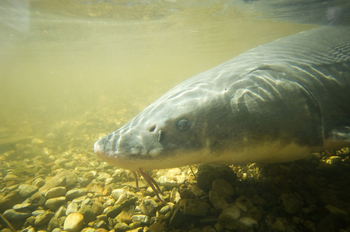
Close up lake sturgeonLake sturgeon (Acipenser fulvescens), the only sturgeon species found in the Great Lakes, are unique in appearance and characteristics. They have five rows of bony plates, called scutes, on their backs and sides, as well as whisker-like barbels near their mouths.

Often referred to as “living fossils” or “dinosaur fish,” lake sturgeon first appeared in the fossil record in the Mesozoic Era, 100 million to 150 million years ago. These fish are long-lived, with some documented at more than 100 years old.

Lake sturgeon are freshwater fish native to Michigan and found in North America throughout the Great Lakes, Mississippi and Hudson River basins. In addition to having high ecological significance, the species is an important cultural resource in our region. Due to overfishing and habitat loss and degradation, however, lake sturgeon abundance remains low throughout most of its historical range.

read more – https://content.govdelivery.com/accounts/MIDNR/bulletins/3de8e62

MUCC filed legal action against the Natural Resources Commission

The NRC oversees the management of fish and wildlife in the State of Michigan.

Now they are being swayed by special public opinion instead of sound science. They have totally abandoned, remember this goes for fishing to. 

Concerned Conservationist,

Today, MUCC filed legal action against the Natural Resources Commission (NRC) to challenge the partial closure of the coyote hunting season.

The commission relied on unsubstantiated claims of negative public perception, social pressures and perceived potential loss of management control.

After reviewing the options, MUCC’s executive board authorized legal action against the commission and filed suit against the NRC.

You can view a press release on the filing HERE

MUCC was founded on the belief that game management decisions be insulated from social and political pressures to the greatest extent possible. Michigan voters agreed, passing Proposal G overwhelmingly in 1996. 

PROPOSAL G

A REFERENDUM ON PUBLIC ACT 377 OF 1966-AN AMENDMENT REGARDING THE MANAGEMENT OF MICHIGAN’S WILDLIFE POPULATIONS

Public Act 377 of 1996 would:

1. Grant the Natural Resources Commission the exclusive authority to regulate the taking of game including bear hunting. (Currently under the authority of the director of the Department of Natural Resources.)

2. Require the Natural Resources Commission to utilize “principles of sound scientific management” in making decisions regarding the taking of game and to minimize human/bear encounters.

3. Require that a public meeting be held prior to the issuance of any orders by the Natural Resources Commission regarding the taking of game.

MUCC believes the commission illegally closed Michigan’s coyote season in violation of their responsibility and legal charge to “the greatest extent practicable, utilize principles of sound scientific management in making decisions regarding the taking of game.” 

The process is expected to take months to complete, and we can only succeed with your help.


From experienced to beginner, Detroit is a great place to fish

Detroit is known for many things. Shaping the modern auto industry. The birth of Motown music. Diehard fans rooting on their Lions, Pistons, Red Wings and Tigers.

Ranked the No. 5 fishing city in the country.  Detroit is home to some of the most diverse and plentiful fisheries in the country, including walleye, bass, perch, crappie, northern pike, channel catfish and muskie.

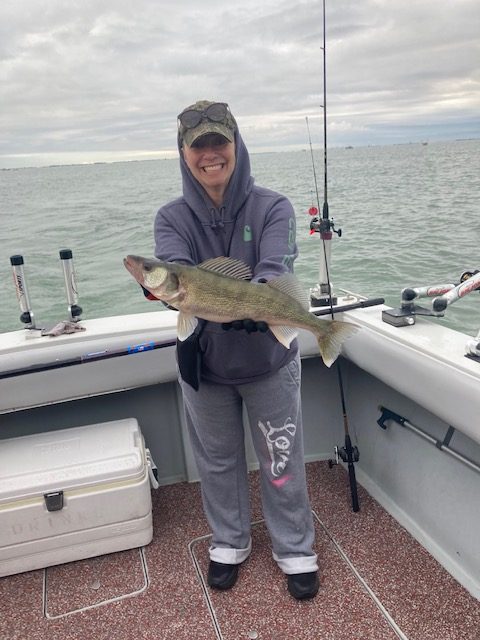
Cathrine Lake Erie Walleye aboard the Stray Cat

Walleye fishing trip Stray Cat Fishing Charter

Last year, licenses purchased by anglers and hunters generated over $66 million for the Michigan Game and Fish Protection Fund. The fund is the DNR’s largest revenue source and is critical to its conservation work. Fishing and hunting equipment sales raised an additional $32 million to support wildlife and natural resource management.

read more

DNR and MSU celebrate 20 years of lake sturgeon research and management

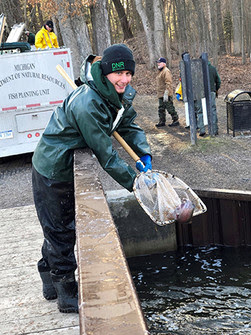
For the past 20 years, the Michigan Department of Natural Resources and Michigan State University have focused on lake sturgeon management, hatchery production, research and outreach at Cheboygan County’s Black Lake.

To celebrate this milestone, the DNR and MSU invite the public to attend an event celebrating lake sturgeon restoration efforts on May 7 at the Black River spawning site at 11 a.m. before continuing at the Black River streamside research and hatchery facility at 1 p.m.

Lake Sturgeon

Lake Sturgeon

The event will showcase the restoration work of this iconic species, recognize the important contributions of partners and raise public awareness of lake sturgeon. Attendees will have a chance to observe fisheries staff collect data from spawning lake sturgeon as well as go on a hatchery tour. Additional activities will recognize the contributions of agency, academic, industry and citizen partners who have made sustained sturgeon renewal efforts possible.

read more

DNR Trout Stocking Clinton and Huron River

Approximately 4,900 adult trout were stocked by the Michigan Department of Natural Resources in the Clinton River (Auburn Hills), Huron River (Proud Lake Recreation Area) and Spring Mill Pond (Island Lake Recreation Area) in southeast Michigan. These fish are retired broodstock from Michigan’s state fish hatcheries.

The Huron River, downstream of the Proud Lake Dam, was stocked with 1,900 brown trout and 1,400 rainbow trout, all ranging in sizes from 13 to 19 inches. Spring Mill Pond was stocked with 380 brown trout and 540 rainbow trout, also ranging in size from 13 to 19 inches.

DNR Trout Stocking Clinton and Huron River

DNR Trout Stocking Clinton and Huron River

In addition, 200 yearling rainbow trout were stocked in the Huron River and 300 in Spring Mill Pond. Anglers should be aware that some portion of these yearlings will at first be smaller than the minimum size limit of 8 inches.

Special regulations apply for anglers interested in targeting these trout:

  • The Huron River at Proud Lake Recreation Area is closed to fishing from Oct. 1 through March 31. From April 1 through April 29, anglers are limited to flies only, catch-and-release fishing. The exception is that children under the age of 12 during this time period may keep one trout that meets the 8-inch minimum size limit and is under 12 inches.
  • Spring Mill Pond at Island Lake Recreation Area is closed to fishing March 15 to March 31. From April 1 through April 29 anglers are limited to artificial lures only, catch-and-release fishing.
  • On both bodies of water, beginning April 30, all baits are allowed, and anglers may keep up to five trout over 8 inches, but only three over 15 inches.
  • The Clinton River was stocked with 650 brown trout averaging 17 inches at Riverside Park in Auburn Hills. The Clinton River is open to trout fishing all year, and anglers can keep up to five trout over 8 inches, but only three over 15 inches.

2022 WIll be another great Walleye season

COLUMBUS, Ohio – Lake Erie anglers can expect world-class walleye fishing opportunities to continue during the 2022 fishing season following years of strong hatches, according to the Ohio Department of Natural Resources (ODNR) Division of Wildlife. Lake Erie maintains its title as The Walleye Capital of the World thanks to science-based management guiding regulations that conserve and ensure long-term angling opportunities across Ohio’s waters.

Additionally, a strong yellow perch population in Lake Erie’s west zone will provide good fishing in 2022, while low catch rates are expected to continue in the central and east zones.

Lake Erie walleye and yellow perch fisheries are managed through an interagency quota system. Each jurisdiction regulates its catches to comply with annually determined safe harvest levels that ensure sustainability. The most recent quotas were announced on Friday, March 25.

Walleye

The walleye daily limit on Lake Erie is six fish per angler with a 15-inch minimum length limit. Walleye hatch success has been exceptional for six of the past eight years. Anglers will mostly catch abundant 2- to 4-year-old-fish ranging from 15 to 22 inches. Larger fish from 2015 and earlier hatches will provide chances to reel in a Fish Ohio qualifying walleye (minimum 28 inches).

Abundant young fish will show up in the catch and range from 9 to 14 inches, with an increasing number of 2-year-olds reaching 15 inches as the season progresses. Anglers are encouraged to release these sub-legal fish with as little handling as possible so they can contribute to the future fishery.

The Stray Cat Charter Boat

The Stray Cat

Yellow perch

Yellow perch abundance in the west zone from Toledo to Huron was above average in 2021 and is expected to remain strong in 2022, supported by consistent hatch success. The 2021 season occasionally provided good fishing in the west zone and should again in 2022. The best success is anticipated during July through mid-August during warm-water periods, and again during mid-October through November as adult perch move to shallow water to feed.

Lake Erie’s central zone from Huron to Fairport Harbor continues to experience low yellow perch abundance, primarily driven by poor to moderate hatches during the past decade. Conservative quotas continue to be set each year. In the east zone from Fairport Harbor to Conneaut, catches have been similar to the central zone with a slightly larger adult population. Catch rates are expected to remain low during the 2022 season, except for times such as late fall when adult perch congregate in larger schools near harbors.

Perch Fishing Charter Lake Erie

Yellow perch daily limits for each zone remain as described in the 2022-23 fishing regulations until May 1, 2022. Any adjustments in daily limits will be announced at wildohio.gov and on an insert printed for Ohio’s fishing regulations brochure before May 1.

Lake Erie fishing reports, information on Lake Erie research and management programs, fisheries resources, maps, and links to other Lake Erie web resources are available at wildohio.gov. The current fishing regulations can be found on the HuntFish OH app, at wildohio.gov, or locations where fishing licenses are sold.

The mission of the Division of Wildlife is to conserve and improve fish and wildlife resources and their habitats for sustainable use and appreciation by all. Visit wildohio.gov to find out more.

ODNR ensures a balance between wise use and protection of our natural resources for the benefit of all. Visit the ODNR website at ohiodnr.gov

Cleaning up the Detroit River

2020 was another good year for habitat restoration and sediment investigation on the Detroit River but water levels created some unexpected issues.  While 2020 was different and unique for many reasons, progress was still made for habitat restoration and sediment investigation on the Detroit River. The Detroit River is one of 27 remaining U.S. Areas of Concern in the Great Lakes Basin. It was a busy year for habitat restoration for Michigan Sea Grant (MISG) and our partners, such as the Friends of the Detroit River (FDR). Although some projects were delayed due to COVID-19 or high water levels, most projects finished the year on schedule: 

Celeron Island

Celeron Island is part of the Detroit River Conservation Crescent near the southern end of Grosse Ile. The Celeron Island habitat restoration project was bid out in the fall of 2018, construction began in the spring of 2019 and was completed in 2020. The project has added nearly 4,000 linear feet of shoals with a sand bar for nesting turtles, snake hibernacula, and common tern nesting areas. The shoals also protect over 100 acres of coastal wetlands with additional spawning habitat to encourage a robust fish population.


read more

Fish wholesaler gets year for illegal trout

CHARLEVOIX, Mich. (AP) — A fish wholesaler in northern Michigan has been sentenced to a year in custody after pleading guilty to acquiring trout that were illegally caught in the Great Lakes.

Federal Judge Paul Maloney says John Cross III of Charlevoix can serve his sentence in the off-season. He appeared in court Monday, months after pleading guilty to a misdemeanor.

The government says Cross and his business, Cross Fisheries, bought about 50,000 pounds of lake trout from a fisherman who was using so-called trap nets. Those fish should have been thrown back into the water.

Separately, Cross’ business pleaded guilty to a felony. The judge will hold another hearing to determine a financial penalty.

read more

Share your thoughts with the DNR at upcoming meetings

March 21, 2019

Share your thoughts with the DNR at upcoming meetings

The Department of Natural Resources is committed to providing Michigan citizens the opportunity to share input and ideas on policy decisions, programs and other aspects of natural resource management and outdoor recreation opportunities. One important avenue for this input is at meetings of the public bodies that advise the DNR and, in some cases, also set policies for natural resource management

Conversations and Coffee fisheries meetings

In addition, the public is invited to join DNR Fisheries Division staff at Conversations & Coffee events this spring for an informal opportunity to discuss local issues and management activities, and to get specific questions answered. More information is available at www.Michigan.gov/Fishing or by contacting Elyse Walter at 517-284-5839.

  • April 2, 6 to 7:30 p.m., Tahquamenon Area Public Library, Newberry
  • April 4, 6 to 7:30 p.m., Holiday Inn Express Munising-Lakeview, Munising
  • April 8, 6 to 8 p.m., Wolf Lake State Fish Hatchery Visitor Center, Mattawan
  • April 9, 2 to 3 p.m., webinar for those interested in southern Lake Huron waters, register online
  • April 9, 6:30 p.m., Bay City State Park Visitor Center, Bay City
  • April 10, 6:30 to 8 p.m., Waterford Fisheries Station, Waterford
  • April 16, 6 p.m., Lake Superior State University, Sault Ste. Marie
  • April 23, 6 to 8 p.m. (CDT), Gogebic Community College, Ironwood
  • April 24, 7 to 9 p.m., Ishpeming Township Hall, Ishpeming
  • April 25, 7 to 9 p.m., Portage Lake District Library, Houghton

April meetings

read more

Boating Safety Certificate Advocates urge boaters to ‘Spring Aboard’ this season

Michigan Boating Safety Certificate

Online or classroom

www.boat-ed.com/michigan

www.boaterexam.com/usa/michigan

The reminder is in line with the National Association of State Boating Law Administrators Spring Aboard – Take a Boating Education Course campaign (March 17-23). Many states require completion of a NASBLA-verified course to rent or operate a powerboat. In Michigan, boaters born after June 30, 1996, must have a boating safety certificate to operate a boat, and boaters born after Dec. 31, 1978, need a boating safety certificate to operate a personal watercraft.

read more