
Michigan’s ancient lake sturgeon are showing signs of a comeback
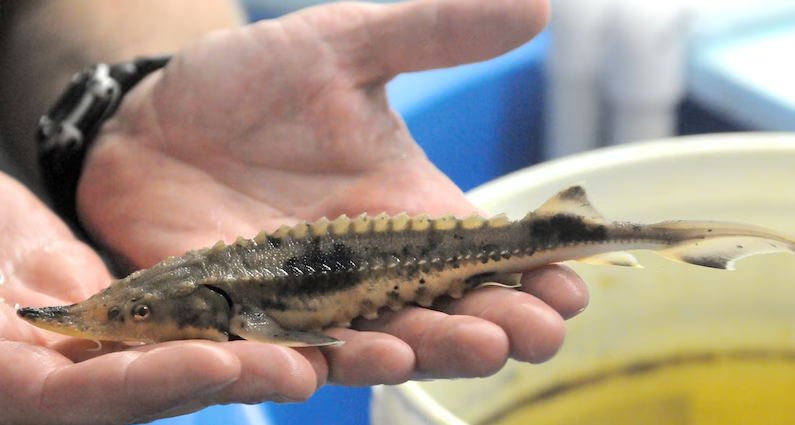
Juvenile and adult sturgeon raised through stocking programs are surviving in the wild, returning to their native rivers and beginning to naturally spawn in some systems. It’s a major milestone for one of the Great Lakes’ oldest and most threatened fish species.
TRAVERSE CITY, Mich. – A quarter century after scientists and tribal biologists began raising and releasing lake sturgeon into Michigan rivers, researchers are now documenting the first clear signs the restoration strategy is working.
By
Juvenile and adult sturgeon raised through stocking programs are surviving in the wild, returning to their native rivers and beginning to naturally spawn in some systems — a major milestone for one of the Great Lakes’ oldest and most threatened fish species.
The goal is to rebuild self-sustaining lake sturgeon populations in Great Lakes tributaries where the species nearly disappeared.
Snapshots of success
Lake sturgeon are often described as “living fossils” because the species has changed little since the age of the dinosaurs.
“They’ve survived ice ages and climate change and meteors and mass extinctions pretty well until the time when we came here and did things that really knocked them down,” said Jeff Jolley, south Lake Huron fishery manager for the Michigan Department of Natural Resources.
Lake sturgeon are bottom-feeding fish that can grow beyond 6 feet long and weigh hundreds of pounds. They also reproduce slowly, relying on clean rivers with access to spawning habitat.
Male sturgeon reach sexual maturity after about 15 years, while it takes as many as 20 to 25 years for female sturgeon to reproduce. Males reproduce every one to three years, while females may take twice as long between spawning cycles.